
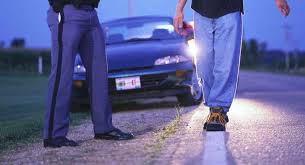
Stress is immediate and overwhelming when pulled over late at night in Georgia. If the officer thinks you are drinking, he will request you to leave your car and do physical agility and cognitive tests. These tests are called standardized field sobriety tests. What police officers don’t tell afraid motorists is that the drills are optional. Additionally, they’re basically made to make you fail. The thought is that, if an officer declares you failed these tests, you will be convicted. This is a very deep misunderstanding. Field sobriety tests are not scientific indicators, but rather a subjective estimation that is subject to human error, environmental and physical conditions. The foundation of a strong legal defense is comprehending the way a competent Atlanta DUI Lawyer can break down and contest these incorrect evaluations.
The Schizophrenic Bias of Standardization
The National Highway Traffic Safety Administration (NHTSA) recommends three tests: The Horizontal Gaze Nystagmus (HGN) test, The Walk and Turn test, and The One-Leg Stand test. These are called standardized and should be given in an extremely specific way – according to a standardised procedure – universally accepted by all in order to be valid indicators of impairment. But cops aren’t doctors, and a busy interstate highway is not a clinical trial setting. Often officers do not give the precise wording of instructions that is needed by NHTSA procedures. May perform the movements improperly, or may move too quickly through the teaching portion of the lesson when the driver is highly distracted by the passing traffic. Any deviation from the very exact and systematically documented grading system (failing to score an official clue, scoring a non-existent clue, etc.) means that the entire evaluation is rendered invalid.
Physical, Medical, Psychological Restrictions
But one of the most obvious weaknesses in roadside tests is that they assume that all drivers have a minimum level of physical fitness and mental state necessary to pass. The Walk and Turn and One Leg Stand are more of a balance test and an agility test. A perfectly straight line heel to toe walk or being able to stand on one foot for 30 seconds is difficult for a person who is totally sober who has previously had knee, back or ankle injuries. Additionally, the NHTSA admits that those who are noticeably obese, or older than 65, will have natural limitations with such physical movements. In addition to the physical symptoms, psychological factors are also a huge part of it. Being investigated by armed law enforcement can trigger all sorts of adrenaline, anxiety and panic responses, including shaking hands, wobbling voice, multi-step instructions being lost. An Atlanta DUI Attorney will look at your medical record carefully to offer other plausible, nondrinking reasons for any actions that an officer incorrectly blamed on drinking.
The contamination of test results by the environment.
Roadside tests are rarely performed in the optimum conditions. A person needs a flat, dry, clean, and bright surface to do a balance test correctly. However, motorists are regularly tested on the rain slicked, gravel-packed highway shoulders or pothole-plagued roads. A person’s ability to pivot easily or to balance on one foot is significantly restricted by high heels, work boots or flip-flops. Not only is testing often done at night — in daylight hours, only the blinding strobe lights of the police and the headlights of oncoming semi trucks can help provide light — but it is also done in the cold of winter. These distractions from what is normally a natural swaying and disorientation, will only reinforce the officer’s suspicions that they have a drunk driver on the road. Defense can use the video from the body camera to show the judge or jury that the circumstances under which the test was administered were so egregious that it was essentially impossible for any sober person to have passed the test.
Deconstructing the Horizontal Gaze Nystagmus Test
The HGN test is one of the three roadside tests that is often the most scientific of the three tests. The officer is searching for a forced eye movement, which may be caused by intoxication. This test is very prone to false-positive results, however. In a substantial proportion of the population, nystagmus is a normal condition, and may be caused by fatigue, caffeine, eye strain or even the flashing emergency lights on the police cruiser itself. Also, proper positioning and timing is important when administering the HGN test. The officer needs to maintain a precise distance from the driver’s eyes when presenting the stimulus and conduct the stimulus presentation at a precisely modeled speed. The officer may induce the exact eye jerking that he/she is trying to measure by moving the pen too quickly or holding it too close. The camera on the dashboard doesn’t necessarily capture the movements of a suspect’s eyes—very small movements—so the court must come to its own conclusions on that.
James Yeargan understands the need to develop a surgical approach to the evidence in challenging field sobriety tests. Strong cross-examination of the arresting officer on the stand can reveal that he/she hasn’t always maintained a consistent training program, the failure to follow NHTSA guidelines, and the desire to rush to judgment. Body camera footage is often broken down frame by frame and the driver’s performance is found to be much better than what is described in the written police report. A proficient advocate will submit motions to exclude them in their entirety. When the judge agrees that the tests were improperly administered or conducted in fundamentally unfair conditions, then the evidence is suppressed, which seriously hobbles the prosecution case. If it is obvious to officers that a driver is being aggressive, it is a red flag that means a driver is being aggressive, rather than a sign of a roadside failure.That is not a sign of a roadside failure, it is an obvious sign to officers that a driver is being aggressive.
